
The pressure to find the lowest price for your bulk soccer uniform order is intense. But choosing the wrong supplier can lead to quality nightmares that damage your brand and cost you more.
The best deal for wholesale soccer uniforms isn't about the lowest price per unit. It's about finding a manufacturing partner who guarantees quality, consistency, and on-time delivery. This approach protects your brand reputation and saves you from the hidden costs of poor production1.
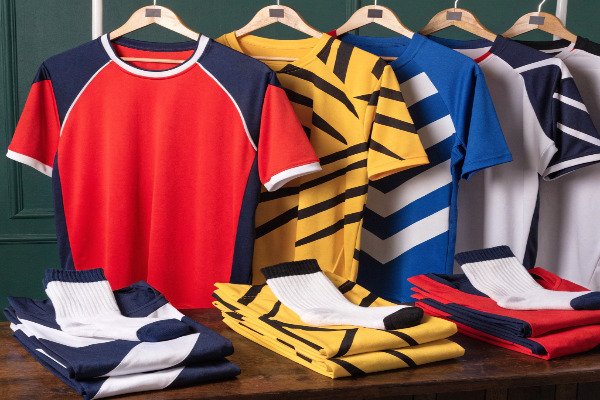
I get it. When you're looking at spreadsheets, a lower unit price is hard to ignore. It feels like a clear win. But in my 16+ years in sportswear manufacturing, I've seen that initial "win" turn into a major loss time and time again. A cheap price tag often hides much bigger problems. Let’s talk about what really happens when a price seems too good to be true, and how you can protect your business from making a costly mistake.
What are the real costs of a low-price uniform order?
You found a supplier with an amazing price that fits your budget perfectly. But what happens when customers complain that logos are peeling off after one wash or seams are unraveling?
The true cost of a cheap uniform goes far beyond the initial invoice.2 It includes the expense of managing returns3, the cost of rush-ordering replacements4, and the lasting damage to your brand's reputation when your product fails5. These hidden costs often wipe out any initial savings.6
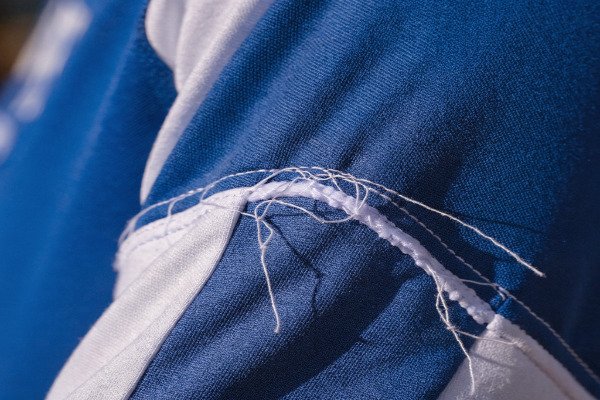
A large part of my work involves what we call "rescue orders." This is when a brand comes to us after a disastrous experience with a low-cost supplier. They need a reliable partner to fix the mess and produce quality uniforms, fast. These situations have taught me that the initial price is only a tiny part of the total cost. The real expenses show up later. For example, a client once came to us after their previous supplier delivered uniforms where the fabric pilled and faded after only three washes. The team looked unprofessional mid-season, and the brand had to replace the entire order at their own expense. This isn't just about money; it’s about trust. When a player's jersey seam splits during a game, it reflects poorly on the team, the league, and your brand.
Here’s a simple way to think about the true cost:
| Cost Factor | Low-Price Supplier | Reliable Manufacturing Partner |
|---|---|---|
| Quoted Unit Price | $10 | $15 |
| Defect & Return Costs | High (e.g., 10% failure rate) | Zero (Guaranteed by AQL 2.57) |
| Rush Remake Costs | Frequent and Expensive | None |
| Brand Reputation | Damaged by complaints | Strengthened by quality |
| True Cost Per Unit | Often over $20 + Lost Trust | $15 |
Looking at this, the "cheaper" option is clearly the more expensive and riskier one in the long run.
Why does re-order consistency matter so much for your brand?
Your first order went smoothly, and now it's time to restock. But the new batch arrives, and the colors don't quite match the old ones. The fit is different. Now you have a big inventory problem.
Re-order consistency is crucial because your brand is a promise of quality.8 When a customer buys your jersey, they expect it to be the same high quality every time. A supplier who can't match colors, fabrics, or sizing on future orders breaks that promise and devalues your brand.
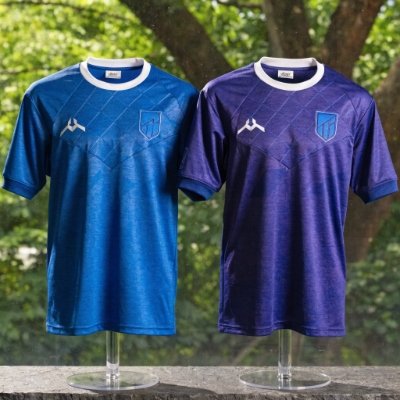
Inconsistency is one of the biggest risks of working with low-cost suppliers. Often, they secure low prices by constantly changing their own material suppliers, chasing whatever is cheapest that week. They don't have standardized processes for color mixing9 or pattern cutting. The result? Your second order of "royal blue" jerseys might be a completely different shade from your first. I saw this happen with a client who was outfitting a large youth league. Their supplier delivered a second batch of uniforms where the shorts were a noticeably different color from the jerseys. It created a logistical nightmare and made the league look disorganized. This is why our experience as an OEM/ODM partner for brands like FILA and STARTER is so critical. We don't just make a product; we create and maintain a product standard. Our ISO 9001 certification means every step is documented and repeatable10, from sourcing the exact same fabric dye lot to using computer-guided cutters for precise sizing11. We guarantee that the uniform you order next year will be identical to the one you approved today.
How can a stable supply chain save your season?
You have a major tournament approaching, and your uniform delivery is non-negotiable. But your supplier calls with a production delay. Now you risk missing your deadline and losing the entire contract.
A partner with a proven, stable supply chain is your best insurance against this kind of disaster. For seasonal sports, a missed deadline can mean an entire season of lost sales12 and a permanently damaged reputation.
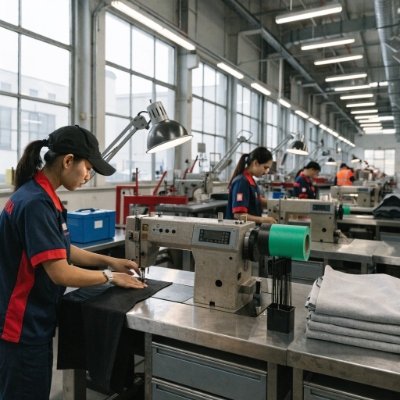
When you look at our factory, you'll see 12 production lines and a 35,000-square-meter facility. These numbers aren't just for show; they represent stability for your business. What does this mean for you? It means we have the capacity and flexibility to handle your order, even during the busiest production seasons. If one line requires maintenance, your order isn't delayed; we simply shift it to another line. Our smart hanging systems move garments automatically, minimizing handling errors and keeping production on schedule. This setup allows us to manage both massive orders for global brands and smaller, urgent re-orders for local teams with the same level of precision. Our annual capacity of over 4 million pieces gives us the ability to secure materials and shipping capacity ahead of time, which translates into predictable timelines and stable costs for you. We avoid the last-minute scrambles that plague smaller factories. A stable supply chain isn't a feature; it's the foundation of a successful partnership. It ensures you get what you need, when you need it.
Conclusion
Choosing a wholesale uniform partner on price alone is a gamble. The true cost includes quality failures, brand damage, and supply chain chaos. A reliable partner protects your business and brand.
A quality-management or procurement source can substantiate that purchase price is only one part of total cost and that defects create measurable downstream costs. ↩
A neutral procurement source can support the idea that supplier decisions should account for lifecycle and operational costs, not just unit price. ↩
Research on reverse logistics and product returns can show that returns generate costs for inspection, processing, shipping, restocking, and replacement. ↩
A logistics or supply-chain source can support that expedited orders and shipping typically increase costs compared with planned production. ↩
Consumer research can support the link between product failure, perceived quality, trust, and brand reputation. ↩
Cost-of-quality literature can explain how internal and external failure costs may outweigh apparent purchase-price savings. ↩
An ISO or standards-based source can clarify what AQL means and how AQL 2.5 is used in sampling inspection. ↩
Brand-management research can support that consistency helps maintain customer expectations, perceived quality, and loyalty. ↩
Textile standards or technical sources can support the need for dye-lot control and color measurement to maintain shade consistency. ↩
An ISO or standards body source can verify that ISO 9001 emphasizes documented processes, process control, and continual quality management. ↩
Apparel-manufacturing research or university materials can support that automated cutting improves repeatability and dimensional accuracy. ↩
Supply-chain and retail research can support that late delivery or stockouts during short selling windows can significantly reduce sales. ↩